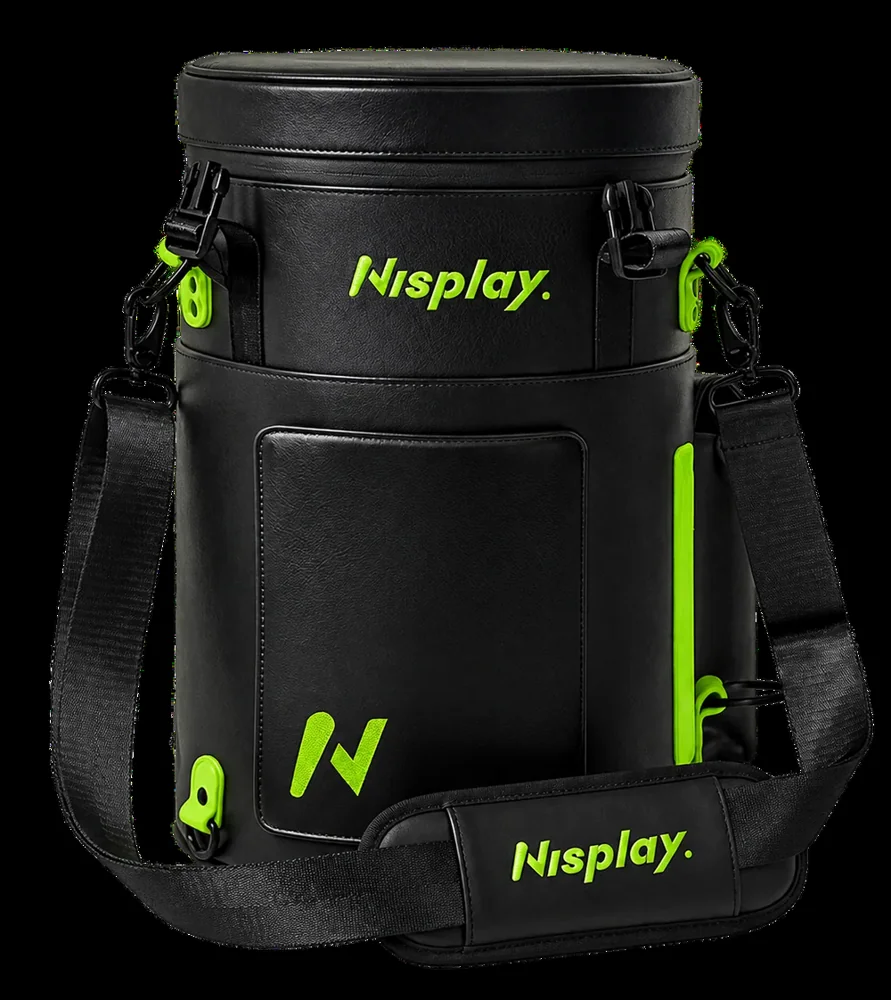
Nisplay
Nisplay L1
A carry-oriented machine with app and pocket-remote controls.
- Ball capacity: 60 balls · up to
- Weight: 13 lb · machine only
A research-based shortlist organized around transport, controls and the way you want to practice.
Begin with the machine that fits your route to the court and your preferred practice routine. A lighter setup, a programmed sequence and an internal oscillator solve different problems, so there is no universal winner.
A carry-oriented machine with app and pocket-remote controls.
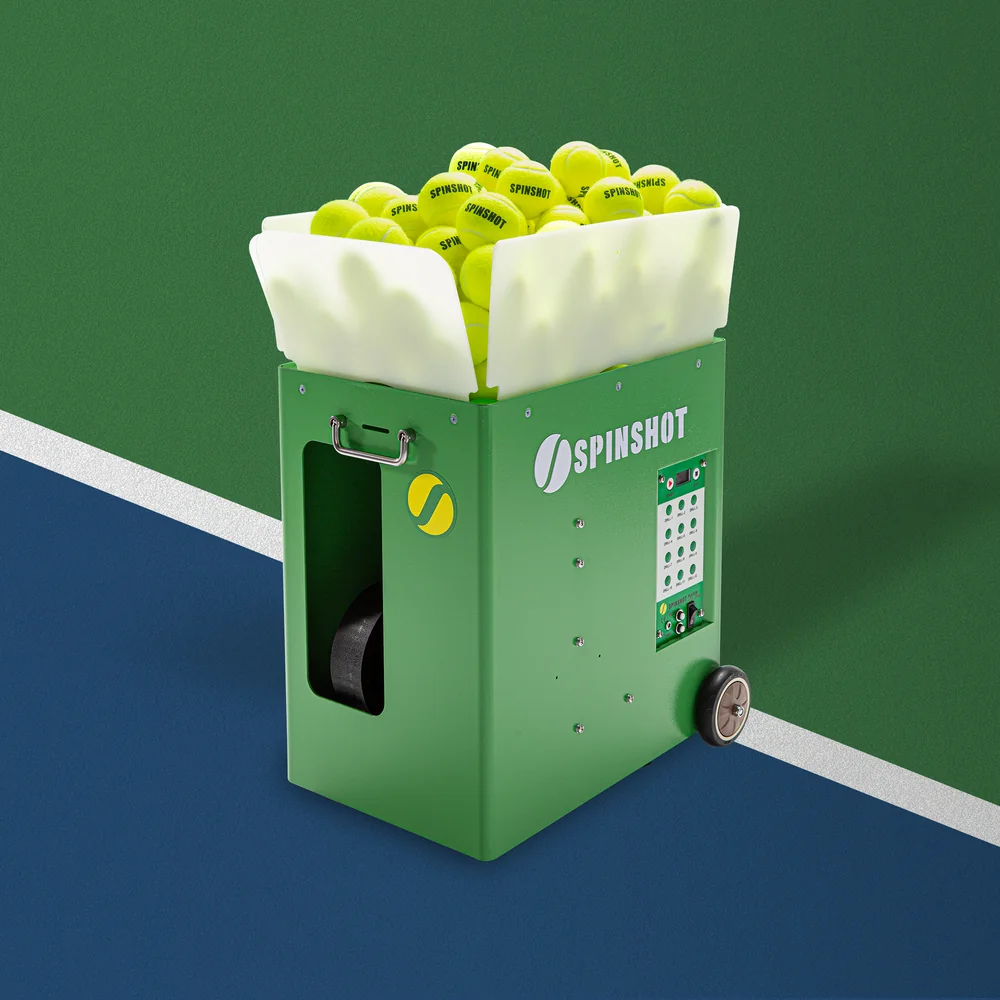
Custom-drill programming in the current HS configuration.
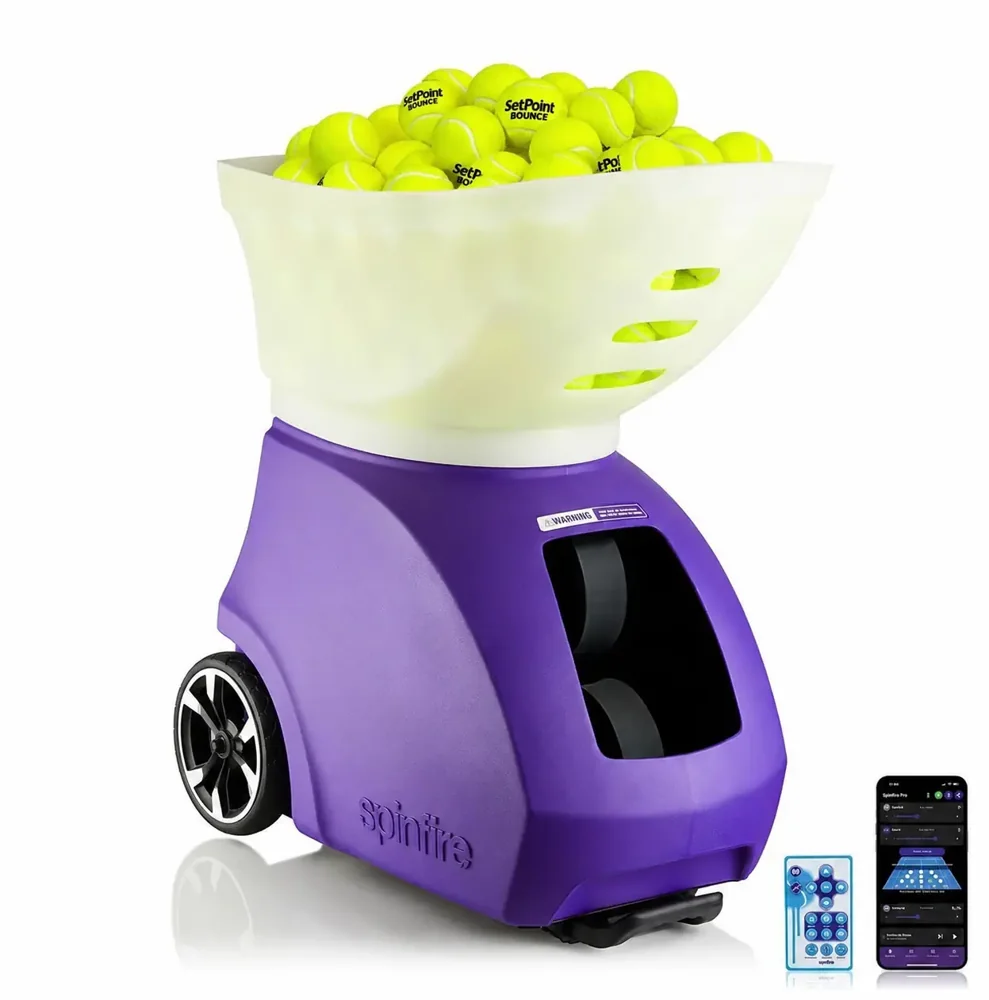
Internal oscillation with a wider set of practice controls.
Swipe horizontally or focus the table and use the arrow keys to view all columns.
| Configuration / claim | Spinshot Player | Spinfire Pro 2 | Nisplay L1 |
|---|---|---|---|
| Ball capacity | 120 balls | 150 balls | 60 ballsup to |
| Maximum ball speed | 80 mphHS version only | 80 mph | Not confirmed |
| Weight | 41 lbwithout battery | Not confirmed | 13 lbmachine only |
| App control | Yes | Not confirmed | Yes |
| Feed interval | Not confirmed | Not confirmed | 1–9 seconds |
L1 is a useful comparison when the physical trip to the court is the limiting factor. Its compact format should be weighed against the hopper, delivery range and session length you need, not treated as automatically best for every player.
Player is a stronger fit for someone who wants to save and repeat specific drill sequences than someone seeking only a basic left-to-right sweep. The current manufacturer page identifies the machine as Player HS.
Pro 2 is relevant when changing direction without swinging the whole machine is part of the practice experience you want. Compare its control and battery options against the lighter app-led alternatives rather than assuming every portable machine carries the same way.
Begin with the machine that fits your route to the court and your preferred practice routine. A lighter setup, a programmed sequence and an internal oscillator solve different problems, so there is no universal winner.
We reviewed manufacturer product information, model comparisons and the configurations discussed in this guide. Where sources disagree, the disputed number is withheld rather than chosen for a more favorable ranking.
Use the criteria above to compare machines for your practice needs.
If you lift the machine repeatedly, examine the full carrying load. If it stays beside a court, controls and practice patterns may be a more important tradeoff.
Use this guide to make a shortlist, then read the exact model and configuration review before choosing.
No. A non-affiliate product can be included, and the presence of a purchase link does not establish it is the best fit.
Spinshot Player Research Review ↗